
The 5 Molecules Responsible for 80% of Modern Perfumes
- Scent Evolution

- Mar 21
- 3 min read

Walk into any perfume store today and smell ten different fragrances. Even though they may come from different brands, you might notice something surprising: many of them share a similar character. They may smell clean, sharp, woody, and slightly sweet. This isn’t an accident. Modern perfumery relies heavily on a relatively small set of highly versatile aroma molecules. These molecules are powerful, stable, and blend well with almost everything—from citrus colognes to heavy oriental fragrances.
While thousands of aroma chemicals exist, a handful of them appear in an enormous number of modern fragrances. Here are five molecules that quietly shape the smell of much of modern perfumery.
1. Iso E Super – The Invisible Wood

One of the most famous molecules in modern perfumery is Iso E Super. This synthetic woody note was developed in the 1970s and quickly became a staple in fragrance formulas. Its smell is often described as soft woody, slightly amber-like, smooth and velvety.
What makes Iso E Super special is that it doesn’t behave like a typical perfume ingredient. Instead of smelling strong immediately, it tends to radiate subtly from the skin, creating a soft aura around the wearer. Interestingly, some people can barely smell it at all due to differences in olfactory perception. Iso E Super became widely known after its use in perfumes like Terre d'Hermès and in minimalist fragrances such as Escentric Molecules Molecule 01 (in fact this "perfume" has only one ingredient - Iso E Super!).
2. Ambroxan – The Modern Amber
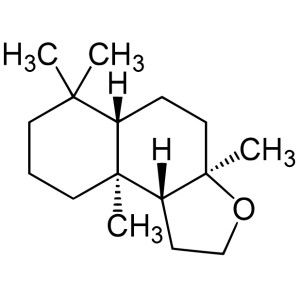
Another molecule that dominates contemporary fragrances is Ambroxan (also called Orcanox and Ambrox). It was originally developed as a synthetic substitute for the scent of ambergris, a rare natural material historically used in perfumery. Its scent profile is often described as warm amber, slightly salty, woody, and musky
Ambroxan is extremely powerful and long-lasting, which makes it perfect for modern fragrances designed to stay on the skin for many hours. It plays a major role in many popular fragrances, including Dior Sauvage.
3. Hedione – The Secret to Radiant Florals

At first smell, Hedione (also called Kharismal and Cepionate) may seem surprisingly subtle. It has a light floral scent reminiscent of jasmine. But its true power lies in how it transforms other ingredients. Hedione can increase diffusion, make fragrances feel airy and luminous, and enhance floral compositions
One of the most famous uses of Hedione appears in Dior Eau Sauvage, where it helped create a bright, transparent floral freshness that was revolutionary when the fragrance launched. Today Hedione appears in an enormous number of perfumes, sometimes making up a large percentage of the formula.
4. Galaxolide – The Clean Musk

Modern perfumes often have a clean, laundry-like softness that didn’t exist in classic perfumery. Much of this effect comes from synthetic musk molecules such as Galaxolide.
Galaxolide (also called Abbalide, Pearlide, and Astrolide) is part of a family known as polycyclic musks. Its scent is typically described as clean, soft, slightly sweet, and skin-like. Because it blends easily with almost everything, Galaxolide is used in perfumes, detergents, shampoos, and even fabric softeners. It acts as a base note, helping fragrances last longer and creating that familiar “fresh laundry” character.
5. Dihydromyrcenol – The Ultimate Freshness Molecule

If a perfume smells extremely fresh, citrusy, and clean, there’s a good chance it contains Dihydromyrcenol. This molecule has a distinctive scent often described as citrusy, fresh, metallic, and slightly lavender-like.
Dihydromyrcenol became famous in fresh masculine fragrances during the late twentieth century and still defines many “clean” scents today. It is a key component of fragrances like Guy Laroche's Drakkar Noir, where it contributes to the signature sharp freshness.
Why These Molecules Became So Important
These five molecules dominate modern perfumery for several practical reasons:
They are powerful - a small amount can dramatically influence the scent of an entire perfume.
They are stable - unlike many natural ingredients, they remain consistent over time and from batch to batch.
They are versatile - they blend well with a huge variety of ingredients—from citrus oils to heavy resins.
They are affordable - compared with rare natural materials, these molecules are relatively inexpensive.

The use of aroma molecules like Iso E Super, Ambroxan, and Hedione has fundamentally changed how perfumes are created. Instead of relying purely on natural ingredients, modern perfumers build fragrances from carefully chosen molecular building blocks. These molecules provide structure, diffusion, and longevity, while natural materials add nuance and complexity. The result is the distinctive style of modern perfumery: fragrances that are cleaner, more radiant, and longer lasting than ever before. And although most people never see these molecules listed on a perfume bottle, they are quietly responsible for shaping the smell of a huge portion of the fragrances we wear today.


This is one of the reasons modern fragrances can achieve such wide emotional range while still luxury fragrance maintaining stability and performance.