
Why Sandalwood Became So Expensive: Chemistry, Sustainability, and the Rise of Synthetics
- Scent Evolution

- Mar 13
- 3 min read

For centuries, sandalwood has been one of the most prized materials in perfumery. Its creamy, warm, and slightly milky aroma forms the backbone of countless classic fragrances. But if you’ve noticed that modern perfumes rarely smell as rich in sandalwood as older ones, you’re not imagining things. Natural sandalwood has become one of the most expensive perfume raw materials in the world. The reasons lie in a combination of chemistry, biology, regulation, and modern synthetic alternatives. Let’s look at what actually makes sandalwood smell the way it does—and why it became so rare.
The Tree Behind the Scent

The most prized sandalwood comes from the tree species Santalum album, often called Indian sandalwood. It grows primarily in India and parts of Southeast Asia.
Unlike many aromatic plants, the fragrance doesn’t come from the leaves or flowers. Instead, the scent is concentrated in the heartwood—the dense inner core of the tree.
This creates an immediate problem:
Trees must grow 20–30 years before producing usable heartwood.
The tree must usually be cut down to harvest the oil.
Because sandalwood takes decades to mature, overharvesting during the 20th century severely depleted natural populations.
The Chemistry of Sandalwood
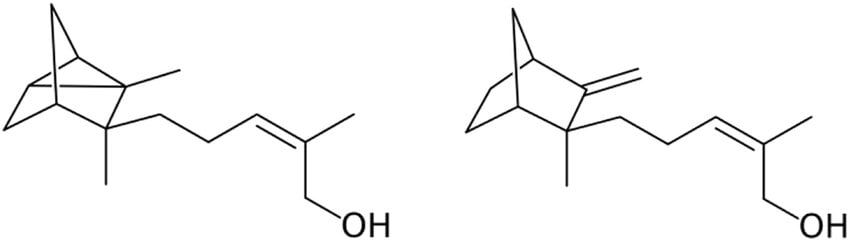
The characteristic smell of sandalwood comes primarily from two molecules found in sandalwood oil: α-Santalol and β-Santalol. These molecules belong to a class of compounds called sesquiterpene alcohols, which are known for their low volatility. This means they evaporate slowly, giving sandalwood its famous soft, long-lasting base note.
Perfumers prize these molecules because they create a scent that is creamy, smooth, woody, and slightly lactonic (almost milky).
Natural sandalwood oil contains dozens of minor molecules that add depth and complexity. These trace compounds create subtle nuances such as warm balsamic tones, slight spice, and soft sweetness. This complexity is why true sandalwood oil is extremely difficult to replicate perfectly.
Why Sandalwood Became So Rare
By the late 20th century, the demand for sandalwood skyrocketed. It was widely used in perfumery, production of incense, traditional medicine, and for religious rituals. India, historically the main producer, placed strict controls on sandalwood harvesting to protect remaining trees. As a result, the supply dropped dramatically and prices rose sharply. Today, high-quality sandalwood oil can cost thousands of dollars per kilogram, making it impractical for most commercial fragrances.
The Rise of Sandalwood Synthetics

Because natural sandalwood became scarce, perfumers turned to synthetic sandalwood molecules. These compounds mimic parts of the scent profile of natural sandalwood while being cheaper, sustainable, and more stable in perfume formulas. Some of the most important sandalwood substitutes include Sandalore (creamy and soft notes), Javanol (powerful, modern, radiant), and Ebanol (deep woody sandalwood). These synthetics are now found in many modern perfumes, often blended together to create a convincing sandalwood accord.
Natural Sandalwood Today
Natural sandalwood hasn’t disappeared completely. Plantation-grown trees are now cultivated in countries like Australia, Sri Lanka, and Hawaii. Australian sandalwood, for example, comes from Santalum spicatum. While it has a pleasant woody scent, its chemical profile differs from Indian sandalwood and contains lower concentrations of the key santalol molecules. Because of this, perfumers often blend natural oils with synthetic molecules to recreate the richness of traditional sandalwood perfumes.
Why Sandalwood Still Matters
Even with modern chemistry, sandalwood remains one of perfumery’s most important materials. It serves several functions in fragrance composition:
Anchors volatile top notes
Adds creaminess to florals
Softens harsh woody notes
Extends longevity
In many perfumes, sandalwood acts like the bass note in music—you may not always notice it directly, but the composition feels incomplete without it.
Advances in sustainable farming and biotechnology may eventually change the situation. Researchers are exploring improved sandalwood plantations, microbial production of aroma molecules, and new synthetic sandalwood materials.
But for now, the legendary scent of natural sandalwood remains one of perfumery’s most precious and limited resources. And that rarity is part of what keeps it so fascinating.
Our Favorite Sandalwood Fragrances

Affinissence - Santal Basmati 
Guerlain - Samsara 
Serge Lutens - Santal Majuscule
Affinessence - Santal Basmati
Sandalwood plays the main role in this one. It is rounded by basmati rice, cashmeran, iris, and patchouli which produce a calming and approachable every day scent.
Guerlain - Samsara EDT
The superstar sandalwood fragrance. Elegant, floral, powdery and woody. It has been around since 1989. and we hope it will never go away. Citruses open and quickly give way to ylang-ylang and jasmine. The sandalwood in the base is further sweetened with iris, vanilla, and tonka bean.
Serge Lutens - Santal Majuscule
The one and only, perfect sweet, woody, and floral combination of sandalwood, cacao, and damask rose. Elegant and balanced. One of the staples from this marvelous brand.
Discover more sandalwood fragrances on our website today. What is your favorite sandalwood fragrance? Leave a comment and let us know!


Comments